
Introduction to Aircraft Structural Analysis (Elsevier Aerospace Engineering) Book In Pdf
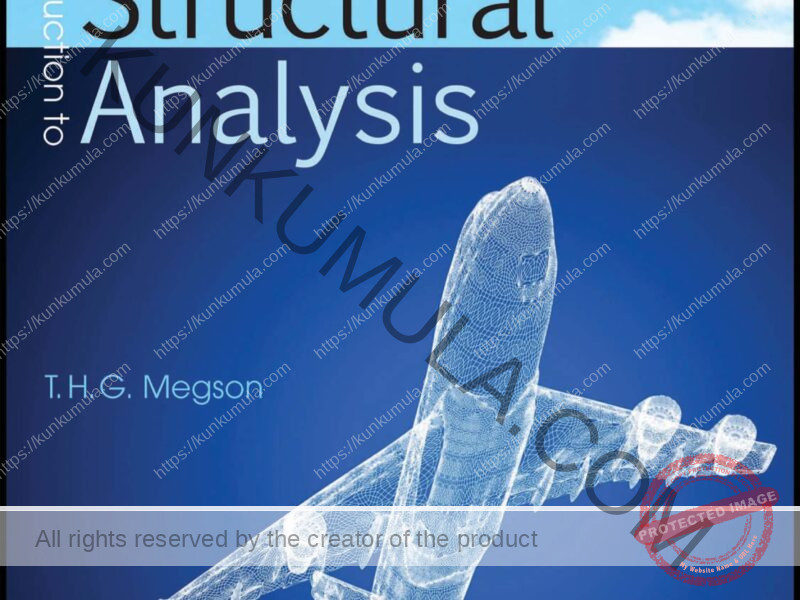
If you’ve ever looked up at a flying airplane and thought, “Wow… that thing is basically a giant metal bird held together by hope and snacks,” this book is here to gently (and scientifically) correct you. Introduction to Aircraft Structural Analysis takes you behind the scenes of flight, where equations not luck keep everything in the air.
This isn’t just another textbook that makes you question your life choices halfway through page three. Oh no. This one is designed to walk you through aircraft structural analysis step by step, like a calm professor who actually remembers what it felt like to be confused. Yes, such professors do exist.
Built from the foundation of the well-loved Aircraft Structures for Engineering Students, this version trims away the “extra weight” (because even books need to stay aerodynamic). With about 200 fewer pages, it delivers the core concepts without overwhelming you, kind of like a perfectly packed carry-on bag instead of a suitcase that explodes at the airport.
Inside, you’ll meet the fascinating world of elasticity no, not the kind that fixes your old socks, but the kind that explains how materials stretch, bend, and behave under pressure. It’s like therapy… but for metals.
Then comes energy methods and virtual work, which might sound like something from a sci-fi movie, but are actually powerful tools engineers use to predict how structures respond to forces. Don’t worry, no actual “virtual employees” are required, just your brain (and maybe a cup of coffee).
As you progress, the book dives into real aircraft scenarios, including airframe loads and stress analysis. In simple terms: it shows you how planes survive takeoff, turbulence, and the occasional passenger who claps when landing. It’s all science, and a little bit of engineering magic.
And let’s talk about examples. This book doesn’t just throw formulas at you and disappear into the clouds. It gives you plenty of worked examples, illustrations, and practice problems so you can actually understand what’s going on. It’s like having a tutor who doesn’t charge by the hour.
From torsion of solid sections to bending of thin plates, from wing spars to fuselage frames, this book covers it all. Think of it as a guided tour through the skeleton of an aircraft, minus the need for a hard hat.
It also introduces matrix methods, which sound intimidating but are actually just a smart way of organizing complex calculations. Once you get the hang of it, you might even feel like a mathematical superhero. Cape not included.
One of the best parts? The book is self-contained. That means you won’t have to go on a treasure hunt through ten other textbooks just to understand one equation. Everything you need is right here, explained clearly, with full derivations for key formulas.
Whether you’re an undergraduate trying to survive your engineering course, a postgraduate aiming for mastery, or a professional brushing up your skills, this book meets you where you are. It doesn’t judge, it just helps.
By the time you finish, you won’t just look at airplanes the same way again, you’ll understand them. You’ll know what keeps them strong, stable, and soaring thousands of feet above the ground. And honestly, that’s a pretty cool superpower to have.
So buckle up, future engineer. This book is your ticket to understanding the hidden forces that make flight possible, no turbulence included (well… maybe just a little).