
Engineering Design with SOLIDWORKS 2016 Book In Pdf / Engineering Design with SOLIDWORKS 2016 (Including unique access code)
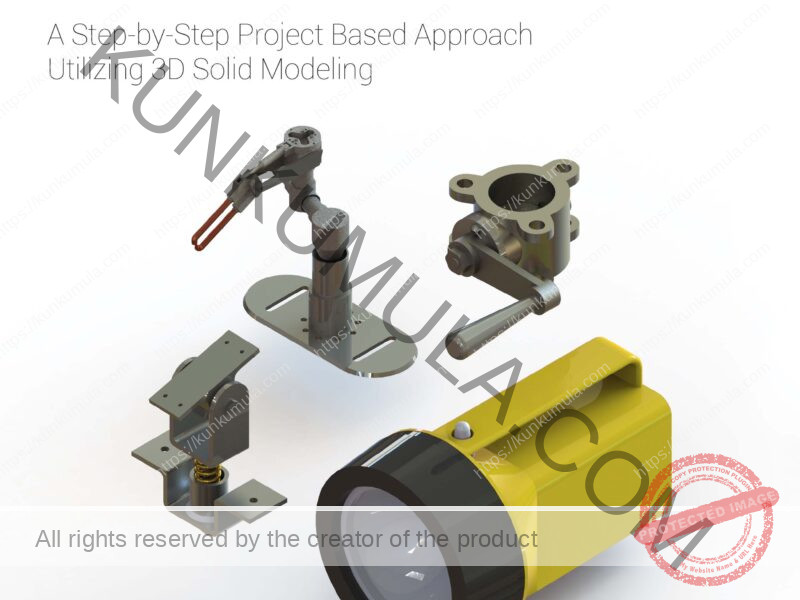
Engineering Design with SOLIDWORKS 2016 is not just a book it is your unofficial engineering survival guide for the digital battlefield where sketches become machines and ideas turn into real-world inventions. Whether you are a student trying to survive your first design class, or a seasoned engineer who just wants SolidWorks to “behave,” this book walks with you step by step like a patient (and slightly sarcastic) engineering mentor.
Inside these pages, SOLIDWORKS is broken down in a way that finally makes sense no mysterious buttons, no “why is this not working?!” moments (well… fewer of them). You will explore the interface, Command Manager, menus, toolbars, and modeling tools like a digital detective solving the case of the missing dimensions.
This book is built on projects, not theory overload. Instead of reading endless explanations that make you sleepy, you actually build things—real parts, real assemblies, and real confidence. Think of it as learning to swim, but instead of being thrown into water, you are guided step-by-step with a floatation device called “clarity.”
As you progress, you will design and assemble parts made of machined components, plastic elements, and sheet metal structures. Yes, the book takes you from “I hope I don’t break this software” to “I just designed something that looks like it belongs in a factory.”
One of the superpowers you will develop is control control over sketches, features, and solid models. You will learn how to create, edit, and modify designs without accidentally turning your project into abstract modern art (unless that’s your goal, of course).
But it doesn’t stop there. You will also learn how professionals reuse and optimize designs using symmetry, patterns, copied components, Design Tables, Bills of Materials, Custom Properties, and Configurations. In simple terms: you will learn how engineers avoid doing the same work twice like smart, caffeinated problem-solvers.
The book also introduces intelligent modeling techniques and analysis tools that help you think like an industry engineer not just someone clicking buttons randomly hoping for miracles. Additive Manufacturing (3D printing) is also explored, because yes, the future includes printing real objects like it’s just another Tuesday.
Each project comes with clear objectives so you always know what you are building and why. No guessing. No confusion. Just structured progress from Project 1 through Project 9, like levels in a game except instead of unlocking weapons, you unlock engineering skills.
Then comes Project 10, where things get futuristic. You dive into 3D printing, understanding how modern engineers bring digital designs into physical reality using low-cost printers that basically turn imagination into plastic reality.
You will also learn how professionals actually work in the real world switching between documents, managing features, and organizing custom properties like experienced designers in the industry, not beginners lost in a maze of menus.
To make learning even easier, video instructions and exercises are included to reinforce every concept. It is not just reading it is doing, practicing, and occasionally saying, “Ohhh, now I get it!”
Real industry collaboration is also reflected in the content, drawing insights from companies like SMC Corporation of America, Boston Gear, and 80/20 Inc. This ensures you are learning skills that are actually used in real engineering environments, not just classroom theory that disappears after exams.
Behind the book is real-world experience blended with input from engineers, managers, vendors, and manufacturers who work with SOLIDWORKS daily. In other words, this is not just theory it is the voice of people who actually build things that work.
At its core, this book is designed to complement the official SOLIDWORKS 2016 tutorials, giving you structure, clarity, and confidence to go from beginner confusion to intermediate mastery without needing to cry over missing constraints.